Uniting community members to transform our neighborhoods is at the heart of what we do.
State & National — Because the Big Picture Comes Down to Your Ballot
2026 is a midterm year. Every House seat. A third of the Senate. 36 governorships. The big picture isn’t distant — it’s on your ballot. Here’s what’s at stake
- 101. 2026 is a midterm year — and midterms determine who controls Congress.
- 102. Congress writes the laws that govern every aspect of American life.
- 103. All 435 seats in the House of Representatives are on the ballot this year!
- 104. A third of the Senate is on the ballot this year!
- 105. A whopping 36 governorships are up for election in 2026!
- 106. Governors control state budgets, emergency responses, and public health decisions.
- 107. State legislatures draw the district lines that shape elections for a decade.
- 108. Voting rights themselves are on the ballot — in legislation and in the makeup of courts.
- 109. Immigration policy is debated and decided by people you can vote for or against.
- 110. The federal minimum wage, overtime rules, and worker protections trace to Congress.
- 111. Federal student loan policy is made by elected officials.
- 112. Healthcare policy — from the ACA to Medicare — is an ongoing legislative debate.
- 113. Climate and environmental regulations are approved or stripped by elected bodies.
- 114. The federal budget, including military spending, is set by Congress who you will be choosing by voting this year.
- 115. Supreme Court appointments are confirmed by senators you can vote for.
- 116. Federal judges at every level are appointed by presidents and confirmed by senators.
- 117. Tax policy is written by your representatives.
- 118. Gun laws, or the absence of them, are legislative choices.
- 119. Infrastructure investment — roads, bridges, broadband, water — requires Congressional action.
- 120. Farm subsidies, food safety, and rural economic policy run through elected agriculture committees.
- 121. Housing affordability at the federal level is a policy choice Congress makes.
- 122. Veterans’ benefits, the VA system, and military family support are legislated.
- 123. The opioid crisis, mental health funding, and addiction treatment are federal budget issues.
- 124. Reproductive rights are being decided in state legislatures and courts right now.
- 125. LGBTQ+ rights, civil rights, and anti-discrimination protections are legislative.
- 126. Criminal justice reform — or its reversal — is happening in statehouses and Congress.
- 127. Social Security and Medicare’s long-term solvency is a Congressional decision.
- 128. Trade policy affects American jobs and prices — and it’s made by elected leaders.
- 129. The national debt is a political choice that elected officials keep making.
- 130. Foreign policy, including which wars we enter or exit, involves Congressional oversight.
- 131. Foreign aid and international alliances are funded and shaped by votes in Congress.
- 132. Election security and voting infrastructure are funded by elected legislatures.
- 133. The Census, which determines congressional representation, is overseen by elected officials.
- 134. Energy policy – oil, gas, renewables, nuclear – is shaped by who you send to Washington.
- 135. The FDA, EPA, FTC, and every other federal agency is led by appointees approved by elected officials.
- 136. The USPS, which delivers your absentee ballot, is funded by Congress.
- 137. Medicaid expansion in your state was a political decision.
- 138. State attorneys general shape how laws are enforced within your state.
- 139. State supreme courts issue rulings that affect your daily life without making national headlines.
- 140. Ballot initiatives and referenda let voters legislate directly, but only if they show up.
- 141. Minimum wage increases in many states have come directly from ballot initiatives.
- 142. Marijuana legalization, in state after state, came from voters, not politicians.
- 143. Paid family leave is winning at the state level because voters keep demanding it.
- 144. Ranked-choice voting and other election reforms are being decided by voters right now.
- 145. Independent redistricting commissions exist in states where voters fought for them.
- 146. The way your state counts votes is shaped by laws your state legislature passed.
- 147. Voter ID requirements, early voting windows, and mail ballot rules are all legislative choices.
- 148. Automatic voter registration is expanding in states where advocates and voters pushed for it.
- 149. Same-day voter registration is available in many states, but only because voters and legislators made it so.
- 150. State-level economic policy sets the business climate where you work and shop.
- 151. Public university tuition is shaped by state budget decisions.
- 152. Teacher pay, school funding formulas, and education policy are state choices.
- 153. Medicaid, CHIP, and state health exchanges serve millions of Americans whose coverage depends on state choices.
- 154. State and local tax burdens, including property tax, sales tax, and income tax, are legislative outcomes.
- 155. Criminal sentencing guidelines in your state were set by elected legislators.
- 156. The governor you elect will likely appoint judges who serve for decades.
- 157. Ballot measures in your state this year may include issues you care about deeply.
- 158. State-level action on housing, homelessness, and mental health is happening now.
- 159. The future of Roe v. Wade’s aftermath is still being written, state by state.
- 160. The size and function of your state government are choices made at the ballot box.
- 161. 2026 results will shape the redistricting battles that begin in 2030.
- 162. The people you elect in 2026 will be in office for the next presidential election.
- 163. Midterm elections historically have lower turnout. This means your vote carries more weight.
- 164. Pollsters, politicians, and parties all model who votes; and they act on those models.
- 165. When your demographic group votes, its priorities become politically unavoidable.
- 166. When your demographic group doesn’t vote, its concerns get de-prioritized.
- 167. Since the margin of a Senate race in your state could be smaller than your neighborhood’s turnout.
- 168. Every major policy shift in American history, the Civil Rights Act, Social Security, and the ACA, required elected officials to act.
- 169. The policies protecting workers, consumers, and the environment all trace to elected votes.
- 170. The policies weakening those protections also trace to elected votes.
- 171. Progress is not automatic. It requires people to vote for it.
- 172. Rollback is not automatic either. It requires people to vote against it.
- 173. Whoever wins in November will govern through significant national decisions.
- 174. Your senator’s vote on a treaty, a budget, or a confirmation will matter.
- 175. State and national elections are not separate things; they are parts of one interconnected system.
Personal — Because It Starts With You – The most personal thing you can do in a democracy is show up. Here’s why it starts with you.
Family & Community — Because It Ripples Outward – Your vote doesn’t stop at the ballot box. It travels home with you — to your kids, your neighbors, your block. Here’s how it ripples.
250 Years of Democracy — Because History Is Watching – None of the rights Americans exercise today arrived automatically. Every expansion of democracy required someone to fight for it, and someone to vote. History is watching this one too
The Final 25. Because Some Things Are Worth Saying Plainly. – You’ve read 225 reasons. Here are the last 25. No flourishes. Just the plain truth. The ballot is in your hand.
250 years from now, someone will want to know that people like you showed up
CCC-Newsletter – November 2026
Movers and Shakers (Prince George’s County)

- 1. Make sure that you are registered to vote and that your information is correct. If you need to register to vote or update your information, you can do it online or submit a voter registration application.
- For the 2026 Gubernatorial General Election, the advanced deadline to register to vote and update your information is Tuesday, October 13, 2026.
- 2. If you use the online system, you must be finished by 11:59 pm. To make sure that you are done by 11:59 pm, we suggest that you access the system no later than 11:50 pm on the deadline.
- If you submit an application after the deadline, election officials will process it after the election. You can provide any new information when you vote, but if you moved, you may have to vote a provisional ballot. If you can’t register by the advanced deadline, go to an early voting center in the county where you live and bring a document that proves where you live. This document can be your MVA-issued license, ID card, or change of address card, or your paycheck, bank statement, utility bill, or other government document with your name and new address.
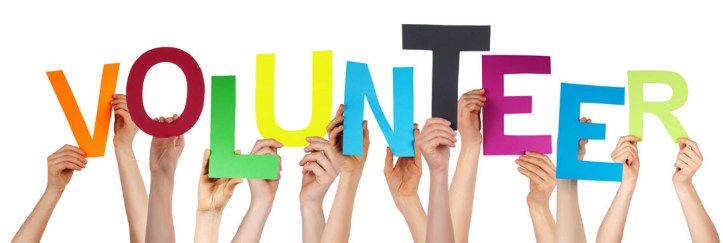
Ways to make your voice heard besides protesting
- Talk to your leaders – One approach is telling government officials what you think about public policies and services. Ordinary people can do this many different ways.
- Write letters to your local paper, serve on task forces, email elected representatives or provide input on proposed new policies[7].
- Speak up at public events like school board and county board meetings. In some cases, this feedback can make a real difference.
- Partner with the authorities
- Get involved at the grassroots level by helping local governments and nonprofits solve problems..
3 ways to make your voice heard besides protesting

Maryland State Board of Elections
- General Info
- Introduction
- Early Voting
- Election Day FAQs
- Mail-In Voting
- Primary Elections
- Voting System
- Overseas & Military
- Registration
- Introduction
- Voter Services
- NVRA
- Application
- Statistics
- Candidacy
- Introduction
- Requirements for Filing
- Qualifications for Filing
- Offices Up for Election
- Press Room
- Press Releases & Statistics
- Reports
- Rumor Control
- Elections
- Latest Election Info
- Special Elections
- Municipal
- Elections Archive
- Districts
- Electoral College
- Get Involved
- Introduction
- Teachers
- Students
- Report Dis/Misinformation
- Voter Education Toolkit
- Campaign Finance
- Introduction
- Campaign Finance Database
- Summary Guide
- Reporting Schedule
- Guidance
- County Public Funding Program
- Agency
- About Us
- Board Meetings
- Contact Us
- County Boards
- Forms
- Election Security
- Public Information Act
- Laws & Regs
- Introduction
- Federal Law
- Election Law
- COMAR
- Petitions
- SBE Policies
- Voting
- Introduction
- Early Voting
- Election Day Questions
- Mail-in Voting
- Accessible Voting
- Change of Address
- Counting Ballots
- Overseas & Military Voters
- Primary Elections
- Provisional Voting
- Recount Guide
- Redistricting
- Voting System
CCC
Our mission is to develop meaningful relationships between communities across Northern Prince George’s County. Through these relationships, we share what works, research solutions for common concerns, and connect communities to resources. We work across all political ideologies to hold elected officials accountable for serving constituents.
M&S
Our mission is to bring individuals who are community leaders together to amplify and strengthen their advocacy efforts. We seek to partner with our local governing bodies and service agencies by forming working relationships. Together we work to solve problems and educate or community members about how to advocate for the services they need.
COMMUNITY INVOLVEMENT – focused on Issues that unite us….
- Doing important work in the community
- Helping others “close the loop” by ….
- Finding out what other community group(s) already supporting others,
- Listing resources already available to community group(s),
- Finding needs that are not being met and/or what resources are needed.
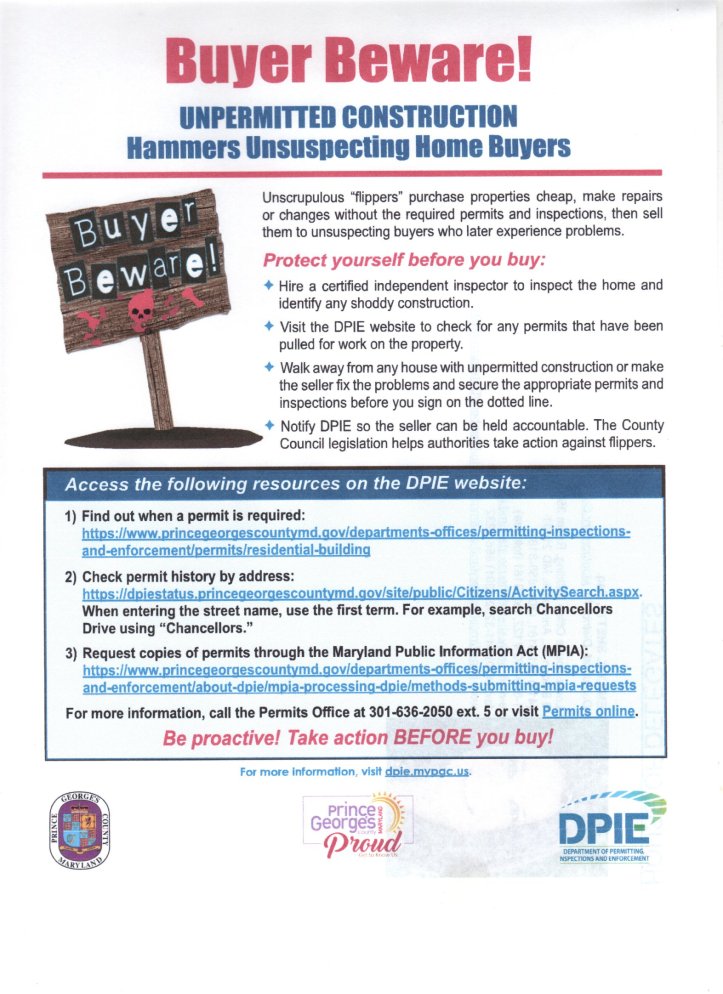
To be able to read this better plus print it out, go to Movers and Shakers section and learn so much more.
The Water Company wishes you wouldn’t.
Click here for the article…
Including gnat and ant control – really works!
More – Article and fun to read..
Movers and Shakers (Prince George’s County)
Recycling Makes Cents!
Recycling rules change regularly but not by whim. New equipment, smarter processing, and better understanding of the market potential contribute to more effective recycling.

Bottle Bill would encourage recycling habits
State lawmakers are looking to put Mr. Trash Wheel on a diet by considering a bill that would add bottle deposits to single-serve containers. Consumers who return the bottles would get that money back. Supporters hope the bill will serve as an incentive to recycle so that fewer bottles end up in our waterways. Bottle Bill Info
PRINCIPLES OF DEMOCRACY

We the people of the United States, in Order to form a more perfect Union, establish Justice Ensure domestic Tranquility, provide for the common defense, promote the general Welfare, and secure the Blessings of Liberty to ourselves and our Posterity, do ordain and establish this Constitution of the United States of America.
“The Hill We Climb” Amanda Gorman’s Inauguration Poem and watch her hands, listen, and learn.


